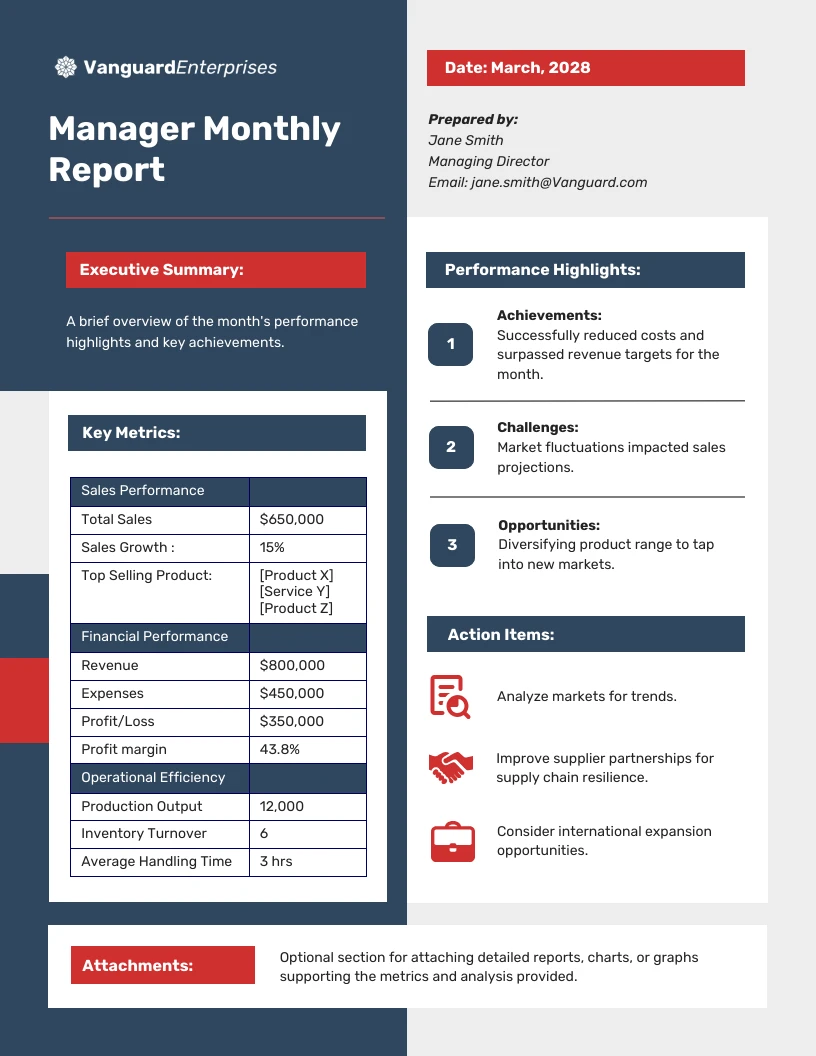
The modern business landscape demands more than just operational efficiency; it requires a clear, data-driven understanding of performance. A well-structured Weekly Manager Report Template is no longer a luxury – it's a critical tool for effective leadership, fostering accountability, and identifying areas for improvement. This comprehensive guide will walk you through creating a robust template, incorporating best practices, and optimizing it for search engines. Weekly Manager Report Template is designed to streamline reporting, providing actionable insights that drive strategic decision-making. It's about more than just numbers; it's about understanding why those numbers are what they are and proactively addressing challenges. This template will help you translate raw data into meaningful reports that inform your team and contribute to overall organizational success. Let's dive in.
Understanding the Purpose of a Weekly Manager Report
The primary purpose of a Weekly Manager Report Template is to provide a concise, objective overview of key performance indicators (KPIs) and progress against goals. It's a communication tool, not a lengthy report, designed to be easily digestible for stakeholders – including executives, team leads, and other managers. Effective reporting isn't just about presenting data; it's about conveying a narrative – a story of what's been achieved, what's not, and what's planned for the coming week. A consistent and well-executed template ensures everyone is on the same page, fostering collaboration and alignment. Without a standardized approach, it's easy to lose track of priorities and misinterpret data. The template's structure promotes transparency and facilitates quick identification of potential issues.
Key Components of a Successful Weekly Report
A truly effective Weekly Manager Report Template should include several key components. These elements work together to provide a holistic view of performance. Firstly, a clear and concise executive summary is essential. This section should highlight the most important achievements, challenges, and planned actions for the week. Secondly, detailed performance metrics should be presented, categorized by area (e.g., Sales, Marketing, Operations, Customer Service). Thirdly, progress against key goals should be clearly articulated, using quantifiable data whenever possible. Finally, a brief discussion of any roadblocks or potential risks is crucial for proactive problem-solving. The level of detail should be tailored to the audience and the specific needs of the report.
Section 1: Sales Performance Overview
This section focuses on the sales team's performance during the week. It's vital to track key metrics like revenue generated, new customer acquisition, and average deal size. Weekly Manager Report Template provides a structured way to analyze this data.
- Total Revenue: Record the total revenue generated during the week. This is the cornerstone of the report.
- New Customer Acquisition: Track the number of new customers acquired. Analyze trends – are you seeing a consistent increase or a dip?
- Average Deal Size: Calculate the average value of each closed deal. This provides insight into the effectiveness of sales efforts.
- Conversion Rate: Measure the percentage of leads that convert into paying customers. A low conversion rate can signal issues with lead qualification or sales processes.
- Sales Pipeline: A visual representation of the sales pipeline – showing the number of deals in each stage – can highlight bottlenecks and opportunities for improvement.
Tracking Sales Metrics – A Deep Dive
To effectively analyze sales performance, it's important to delve deeper into specific metrics. For example, instead of simply reporting total revenue, consider breaking it down by product line or region. This allows for a more granular understanding of sales effectiveness. Furthermore, analyze sales trends over time – are you seeing consistent growth, decline, or stagnation? Visualizations like charts and graphs can be incredibly effective in communicating these trends. Consider using a dashboard to present key sales metrics in a visually appealing and easily digestible format.
Section 2: Marketing Campaign Performance
This section examines the effectiveness of marketing campaigns. It's crucial to assess campaign ROI, engagement, and lead generation.
- Campaign Performance: For each campaign, record key metrics such as impressions, clicks, conversions, and cost per acquisition.
- Website Traffic: Track website traffic generated by the campaign – this can be measured through Google Analytics or similar tools.
- Lead Generation: Measure the number of leads generated by the campaign.
- Social Media Engagement: Monitor social media engagement – likes, shares, comments, and follower growth.
- Return on Investment (ROI): Calculate the ROI of each campaign to determine its profitability. A clear ROI calculation is essential for justifying marketing spend.
Analyzing Marketing Campaign Effectiveness
A robust marketing report requires more than just tracking metrics. It's about understanding why certain campaigns are performing well or poorly. Conduct A/B testing to optimize campaign elements and identify what resonates with your target audience. Analyze customer feedback to understand their perceptions of the campaign. Don't just report the numbers; provide context and insights into the campaign's impact.
Section 3: Operational Efficiency & Process Improvement
This section focuses on identifying areas for operational improvement and tracking key performance indicators related to efficiency.
- Key Performance Indicators (KPIs): Identify KPIs relevant to operational efficiency, such as cycle time, error rate, and resource utilization.
- Process Monitoring: Track key processes – such as order fulfillment, customer onboarding, or service request handling – to identify bottlenecks and areas for optimization.
- Resource Utilization: Monitor resource utilization – such as employee time, equipment, and materials – to identify potential inefficiencies.
- Cost Analysis: Track costs associated with operational processes – such as labor, materials, and overhead – to identify opportunities for cost reduction.
Streamlining Operations – Practical Strategies
Improving operational efficiency requires a systematic approach. Start by identifying the root causes of inefficiencies. Implement process improvements, automate tasks, and provide employees with the training and tools they need to succeed. Regularly review and update processes to ensure they remain effective. Don't be afraid to experiment with new technologies and approaches.
Section 4: Customer Service Performance
This section focuses on customer service metrics, including response times, resolution rates, and customer satisfaction.
- Customer Satisfaction (CSAT) Score: Measure customer satisfaction through surveys or feedback forms.
- Average Resolution Time: Track the average time it takes to resolve customer issues.
- First Contact Resolution (FCR) Rate: Measure the percentage of issues resolved on the first contact.
- Ticket Volume: Monitor the number of customer service tickets received.
- Customer Effort Score (CES): Assess the ease with which customers can resolve their issues.
Enhancing Customer Service Excellence
Providing excellent customer service is crucial for building loyalty and positive word-of-mouth. Invest in training for your customer service team. Empower them to make decisions and resolve issues quickly. Use customer feedback to identify areas for improvement. Implement a system for tracking and resolving customer complaints.
Section 5: Forecast & Projections
This section provides a forecast of expected performance for the upcoming week, based on current trends and anticipated events.
- Sales Forecast: Project sales revenue for the coming week.
- Marketing Campaign Forecast: Project the performance of upcoming marketing campaigns.
- Operational Forecast: Project key operational metrics, such as cycle time and resource utilization.
- Risk Assessment: Identify potential risks that could impact performance and develop mitigation strategies.
Predictive Analytics – A Powerful Tool
Using forecasting tools and data analysis techniques, you can gain valuable insights into future performance. This allows you to proactively address potential challenges and capitalize on opportunities. Regularly review and update your forecasts based on actual performance data.
Conclusion
The Weekly Manager Report Template is a powerful tool for effective leadership and organizational success. By consistently implementing this template, tracking key performance indicators, and analyzing data, managers can gain a clear understanding of their teams' performance and drive strategic decision-making. Remember that the template is a starting point – it should be customized to fit the specific needs of your organization and the roles of your team members. Continuous improvement and adaptation are key to maximizing the value of this essential reporting tool. Ultimately, a well-crafted Weekly Manager Report Template empowers leaders to make informed decisions, improve performance, and achieve organizational goals. Weekly Manager Report Template is a fundamental component of a successful management strategy.
Additional Resources
- [Link to a reputable business reporting template example]
- [Link to an article on effective KPI tracking]
- [Link to a guide on data visualization]
0 Response to "Weekly Manager Report Template"
Posting Komentar