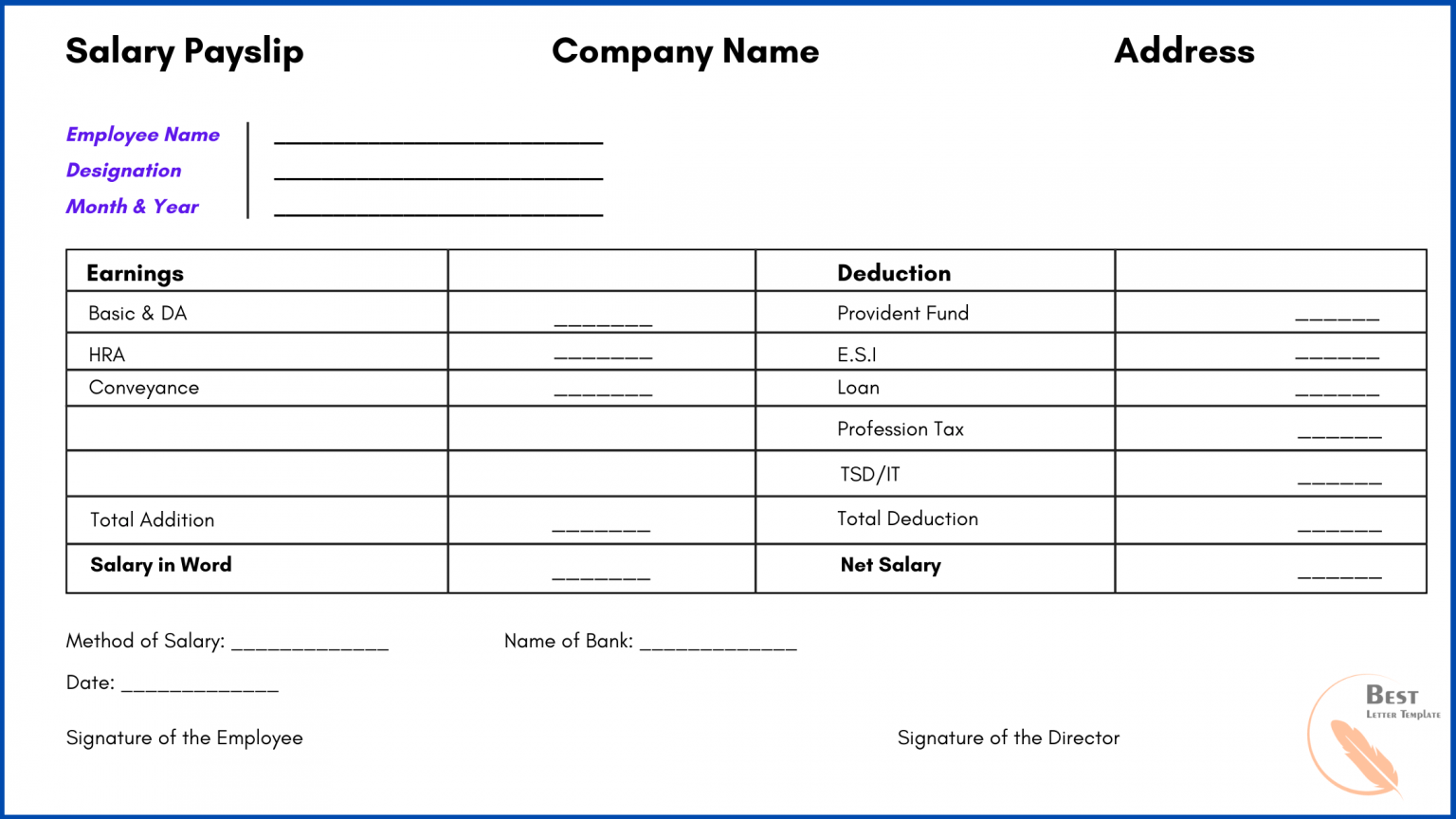
Creating a clear and organized payslip is crucial for accurate financial reporting and efficient tax preparation. A well-structured payslip provides a detailed record of employee earnings, deductions, and reimbursements, simplifying compliance and reducing potential errors. This guide provides a comprehensive overview of creating a blank payslip template, covering essential sections and best practices. Blank Payslip Template – understanding its components is the first step to ensuring a smooth and compliant process. The goal is to create a template that's both functional and easily adaptable to different business needs. This article will walk you through the key elements, offering practical advice and helpful resources to help you build a payslip that meets your organization's requirements. From basic information to detailed deductions, we'll cover everything you need to know.
Understanding the Purpose of a Payslip
A payslip is a document that summarizes an employee's earnings and deductions for a specific pay period. It's more than just a simple record; it's a vital tool for payroll processing, tax reporting, and compliance. Properly formatted payslips are essential for demonstrating accurate payroll practices and ensuring compliance with tax regulations. They also provide valuable insights into employee spending habits and potential areas for cost savings. A well-designed payslip can significantly reduce the risk of errors and penalties associated with inaccurate payroll calculations. The template should be easily accessible to payroll administrators and employees, streamlining the entire process.
Core Sections of a Blank Payslip Template
Let's break down the essential sections typically included in a payslip. Each section has specific requirements and considerations. A blank payslip template should be designed to be easily filled out, minimizing the need for extensive data entry. The level of detail required will vary depending on the business and the complexity of the payroll system.
1. Employee Information
The first section of the payslip should include essential employee information. This includes:
- Employee Name: Clearly displayed, ensuring accurate identification.
- Employee ID: A unique identifier for the employee, crucial for payroll processing.
- Date of Hire: The date the employee started working.
- Job Title: The employee's official job title.
- Department: The department the employee belongs to.
2. Gross Earnings
This section details the employee's total earnings for the pay period. It's important to accurately record all sources of income, including:
- Salary: The employee's regular salary.
- Hourly Wage: The employee's hourly rate.
- Bonuses: Any bonuses earned during the pay period.
- Commission: Any commissions earned.
- Other Income: Any other sources of income, such as gifts, prizes, or other payments.
3. Deductions
This section outlines all deductions taken from the employee's gross earnings. Common deductions include:
- Federal Income Tax: The employee's federal income tax liability.
- State Income Tax: The employee's state income tax liability.
- Social Security Tax: The employee's Social Security tax.
- Medicare Tax: The employee's Medicare tax.
- Health Insurance Premiums: Employee-paid health insurance premiums.
- Retirement Contributions: Contributions made to employee retirement plans.
- Other Deductions: Any other deductions, such as union dues or charitable donations.
4. Net Earnings
This section calculates the employee's take-home pay after all deductions have been taken out. It's the final amount the employee receives.
- Net Salary: The calculated net salary.
- Net Deductions: The sum of all deductions.
5. Reimbursements
This section details any reimbursements issued to the employee. This might include:
- Travel Expenses: Reimbursement for business travel.
- Office Supplies: Reimbursement for office supplies.
- Meal Expenses: Reimbursement for meals.
- Other Reimbursements: Any other reimbursements issued.
Blank Payslip Template – A Detailed Example
Here's a more detailed example of a payslip, incorporating several of the sections outlined above. This is a simplified example and should be adapted to meet specific business needs.
Blank Payslip Template
Employee Information
- Employee Name: John Doe
- Employee ID: 1234567
- Date of Hire: 2023-10-26
- Job Title: Marketing Specialist
- Department: Marketing
Gross Earnings
- Salary: $60,000.00
- Hourly Wage: $60.00
- Bonuses: $1,000.00
- Commission: $500.00
- Other Income: $200.00
Deductions
- Federal Income Tax: $3,000.00
- State Income Tax: $1,500.00
- Social Security Tax: $800.00
- Medicare Tax: $200.00
- Health Insurance Premiums: $300.00
- Retirement Contributions: $200.00
Net Earnings
- Net Salary: $57,000.00
- Net Deductions: $10,500.00
Reimbursements
- Travel Expenses: $100.00
- Office Supplies: $50.00
Total Reimbursements: $150.00
Payment Details
- Pay Date: 2023-12-31
- Pay Method: Direct Deposit
Notes: Please review this payslip carefully for accuracy. Contact payroll@companyname.com if you have any questions.
Conclusion
Creating a well-structured and accurate payslip is a critical component of effective payroll management. By understanding the key sections and adhering to best practices, businesses can ensure compliance, minimize errors, and streamline their financial processes. A blank payslip template provides a solid foundation for this process, but it's essential to tailor the template to the specific needs of each organization. Regularly reviewing and updating the payslip ensures that it remains accurate and compliant with evolving regulations. Investing in a user-friendly payroll software solution can significantly simplify the process and reduce the risk of errors. Ultimately, a clear and accurate payslip empowers both employees and employers to manage their finances effectively. Don't underestimate the importance of a well-maintained payslip – it's a vital tool for financial health and operational efficiency.
0 Response to "Blank Payslip Template"
Posting Komentar