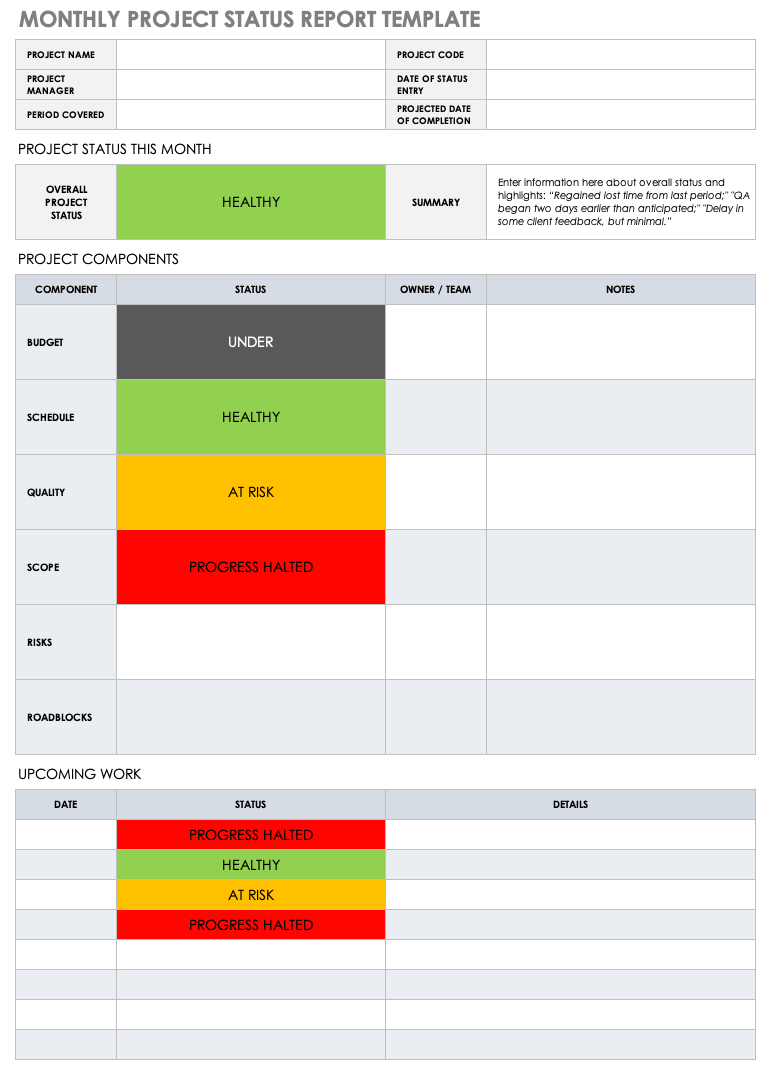
Are you struggling to keep your projects organized and on track? A well-structured Project Monthly Status Report Template is your key to effective communication, improved project management, and ultimately, successful project delivery. This comprehensive guide will walk you through creating a template that's both informative and easy to use, ensuring everyone involved understands the project's progress and any potential roadblocks. The core of this article is centered around the importance of a robust status report – a vital tool for transparency and accountability. Let's dive in.
Why a Project Monthly Status Report Template is Essential
In today's fast-paced business environment, projects are constantly evolving. Regularly tracking progress, identifying issues, and communicating updates is crucial. A standardized template provides a consistent framework for reporting, streamlining the process and ensuring everyone is aligned on the project's status. It's more than just a document; it's a communication tool that fosters collaboration and helps prevent misunderstandings. Without a template, you risk information silos, missed deadlines, and ultimately, project failure. A well-crafted template empowers project managers and team members alike to proactively address challenges and celebrate successes. It's an investment in project success.

Key Components of a Project Monthly Status Report Template
A truly effective template should include several key elements. It's not about rigid adherence to a specific format; rather, it's about structuring information in a way that's easily digestible and actionable. Here's a breakdown of the essential components:
- Project Overview: Briefly summarize the project's goals, objectives, and overall timeline. This provides context for the report.
- Progress Summary: This is the heart of the report. Detail what has been accomplished during the past month. Quantify progress whenever possible – use percentages, numbers, and specific milestones achieved.
- Task Status: Outline the status of each task, including completion percentage, estimated completion date, and any roadblocks encountered.
- Budget & Expenses: Report on actual spending versus the planned budget. Highlight any significant variances and explain the reasons behind them.
- Risks & Issues: Identify any potential risks that could impact the project and document their impact and mitigation strategies. Also, list any issues that require immediate attention.
- Upcoming Activities: Outline the key activities planned for the next month, including milestones and deadlines.
- Resource Utilization: Report on resource allocation and utilization – are resources being used effectively?
- Team Performance: Briefly assess team performance – are there any areas where improvement is needed?
Section 1: Project Overview – A Foundation for Success
The first section of the report should provide a concise overview of the project. It's important to clearly state the project's purpose and key objectives. For example: "Project Phoenix aims to streamline the customer onboarding process, reducing time-to-value by 20%." This section sets the stage for the entire report. Remember to include a brief timeline – a visual representation of the project's milestones and deadlines is highly beneficial. This helps stakeholders quickly understand the project's progression. This section is crucial for demonstrating the project's importance and providing a clear context for the subsequent data.
Section 2: Progress Summary – Tracking Key Metrics
This section is where you present the tangible results of the project's work. Don't just list tasks; quantify the progress. Here are some examples of metrics you might include:
- Tasks Completed: Total number of tasks completed during the month.
- Tasks in Progress: Number of tasks currently being worked on.
- Tasks Completed (Percentage): Percentage of tasks completed compared to the planned schedule.
- Burn-down Chart (Optional): A visual representation of the remaining work over time.
- Key Performance Indicators (KPIs): If applicable, track KPIs relevant to the project (e.g., customer satisfaction scores, lead conversion rates).
Section 3: Task Status – Detailed Breakdown
This section provides a more granular view of task progress. For each task, include:
- Task Name: A clear and concise description of the task.
- Assigned To: The individual responsible for the task.
- Start Date: The date the task was assigned.
- End Date: The expected completion date.
- Status: The current status of the task (e.g., Not Started, In Progress, Completed, Blocked).
- % Complete: The percentage of the task that has been completed.
- Notes: Any relevant notes or comments about the task.
Section 4: Budget & Expenses – Maintaining Financial Control
This section is vital for demonstrating responsible financial management. Report on actual spending versus the planned budget. Include:
- Total Budget: The total amount allocated for the project.
- Actual Spending: The total amount spent during the month.
- Variance: The difference between the budgeted amount and the actual spending (e.g., $10,000 variance).
- Explanation of Variances: Provide a clear explanation for any significant variances.
- Cost Breakdown: Categorize expenses (e.g., labor, materials, travel) to provide a more detailed view of costs.
Section 5: Risks & Issues – Proactive Problem Solving
This section is critical for identifying and addressing potential problems before they impact the project.
- Risk Identification: List any identified risks that could affect the project.
- Risk Impact Assessment: Assess the potential impact of each risk (e.g., low, medium, high).
- Risk Mitigation Strategies: Describe the steps being taken to mitigate each risk.
- Issue Log: Document any issues that have arisen during the month, including their description, impact, and resolution.
Section 6: Upcoming Activities – Planning for the Future
This section outlines the key activities planned for the next month. It's a roadmap for the team.
- Milestones: List key milestones and their expected completion dates.
- Tasks: Outline the specific tasks that will be undertaken.
- Dependencies: Identify any dependencies that need to be addressed.
Section 7: Resource Utilization – Optimizing Team Performance
This section assesses how resources are being utilized. It's important to identify any bottlenecks or areas where resources could be more efficiently allocated.
- Resource Allocation: Report on how resources are being allocated across different tasks.
- Utilization Rate: Measure the utilization rate of each resource.
- Bottleneck Analysis: Identify any bottlenecks that are hindering progress.
Conclusion – A Summary of Key Takeaways
A well-structured Project Monthly Status Report Template is more than just a document; it's a powerful tool for communication, collaboration, and project success. By consistently tracking progress, identifying issues, and communicating updates effectively, project teams can ensure that projects stay on track, within budget, and deliver the desired results. Remember to tailor the template to your specific project needs and regularly review and update it to ensure it remains relevant and effective. Continuous improvement is key – experiment with different formats and approaches to find what works best for your team. Ultimately, a proactive and transparent approach to reporting will contribute significantly to the overall success of your projects. Don't underestimate the value of a clear, concise, and well-documented status report. Project Monthly Status Report Template – a cornerstone of effective project management.
0 Response to "Project Monthly Status Report Template"
Posting Komentar